

Paraguay is increasingly being considered in this context. Not as a trend, but as a practical option for companies that want to combine operational efficiency with a straightforward regulatory environment.
To understand whether it fits, businesses need to look at both company formation in Paraguay and company management in Paraguay as part of a single operational strategy.
Starting with the Right Structure
Every expansion begins with a legal setup. But the structure you choose should reflect how the business will actually function not just how it looks on paper.
Company formation in Paraguay usually involves:
- Creating a local legal entity
- Defining ownership and control
- Assigning legal representation
- Completing tax registration
- Setting up banking access
While these steps are relatively simple, they should not be treated as a checklist exercise. The structure needs to support real activities such as hiring, service delivery, and internal coordination.
A company that is properly set up but not aligned with its operational goals will face limitations early on.
Building Operations After Formation
Once the entity exists, the focus shifts quickly to execution. This is where company management in Paraguay becomes critical.
Running a company locally involves more than administrative compliance. It includes building a functional system that can support daily business activity.
This often means:
- Recruiting and managing local staff
- Establishing internal workflows
- Coordinating with international teams
- Handling accounting and reporting
- Ensuring regulatory compliance
For many businesses, Paraguay is not the headquarters it is part of a wider structure. That makes coordination and clarity in management even more important.
Where Paraguay Fits
Paraguay is rarely used as a standalone market entry. Instead, it is commonly integrated into a broader international setup.
Companies often use it for:
- Back-office and support operations
- Customer service and administrative functions
- Technical and development teams
- Regional service hubs
This approach allows businesses to maintain their core markets while optimizing how and where work gets done.
In this sense, company formation in Paraguay is less about market access and more about operational design.
Cost Efficiency Without Complexity
One of the main reasons companies consider Paraguay is cost. But cost alone is not enough what matters are whether those savings come with additional complications.
In Paraguay, lower costs are combined with relatively simple processes. This includes:
- Lower labor costs compared to North America and Europe
- Affordable office and infrastructure expenses
- A tax system that is easy to understand and apply
This balance makes it easier to scale operations without significantly increasing administrative burden.
However, these advantages only work when company management in Paraguay is handled properly. Without structure and oversight, cost savings can quickly turn into inefficiencies.
Gateway to Mercosur
Paraguay can serve as a strategic gateway to Mercosur, enabling companies to operate within a broader regional market.
Among the country’s key advantages are its competitive cost structure and highly favorable tax regime. In particular, the Maquila Law stands out, as it applies to both goods and services, along with the possibility of exporting to other Mercosur countries duty-free, provided that the product qualifies as Paraguayan in origin, meaning that the processing carried out in Paraguay generates sufficient added value.
Common Challenges to Be Aware Of
While Paraguay offers clear benefits, companies should approach expansion with realistic expectations.
Some common challenges include:
- Adjusting to local business practices
- Building reliable teams from scratch
- Ensuring consistent communication across locations
- Maintaining compliance without local experience
These are not barriers, but they do require planning. Companies that prepare for these factors tend to integrate more smoothly.
Aligning Structure and Execution
A successful setup depends on alignment between how the company is structured and how it operates.
This means:
- The legal entity should match the business model
- Operational processes should reflect real workflows
- Financial reporting should align with actual activity
When company formation in Paraguay and company management in Paraguay are aligned from the beginning, the structure becomes easier to maintain and scale.
Final Thoughts
Expanding into Paraguay is not about taking shortcuts it’s about building a more efficient way to operate.
For companies that approach it with a clear plan, it offers a combination of simplicity, flexibility, and cost control that is difficult to achieve in more complex jurisdictions.
The key is to treat company formation and company management in Paraguay as part of the same process, not separate steps.
Because ultimately, the value of any international structure depends on how well it performs in practice.
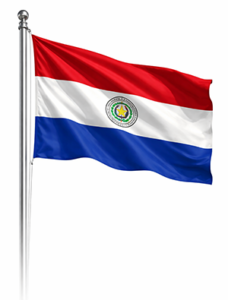 Build your operations from Paraguay